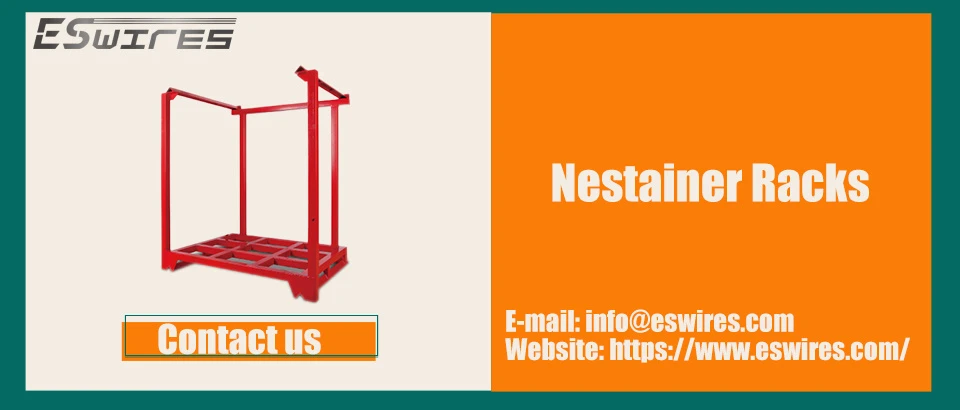
Choosing the right Nestainer rack is important for businesses that want to improve warehouse storage density while keeping material handling flexible. With different sizes, load capacities, and designs available, the best choice depends on the products being stored and the actual warehouse environment.
1. Check the Load Capacity
The first factor to consider is the maximum weight of the goods. Heavy industrial products require a rack with sufficient load capacity and structural strength. The rated capacity should match the heaviest load that will be stored, rather than the average load. For example, some Nestainer models are designed for loads of up to 1,000 kg and can be stacked four levels high.
2. Choose the Right Dimensions
Rack dimensions should match both the goods and the available warehouse space. Measure the length, width, and height of your products before selecting a model. You should also consider aisle width, forklift access, and the available ceiling height to ensure that loaded racks can be safely handled and stacked.
3. Consider Stacking Requirements
One of the main advantages of Nestainer rack is vertical storage. However, the maximum stacking height needs to match your warehouse conditions and operational requirements. A suitable stacking configuration can increase storage density without requiring additional fixed racking.
4. Consider Your Application
Different industries may have different storage requirements. Pallet tainers can be used for general warehouse storage, logistics, tires, textiles, automotive parts, recycling, and other applications. The rack design should provide enough internal space and support for the specific products being stored.
5. Think About Flexibility
If your inventory changes frequently, a portable stacking rack can provide greater flexibility than fixed storage systems. Detachable designs can also make transportation and storage more convenient when the racks are not in use.
Make the Right Choice
The right Nestainer rack should balance load capacity, dimensions, stacking height, forklift access, and application requirements. By evaluating these factors before purchasing, businesses can choose a storage solution that makes better use of warehouse space while supporting safe and efficient material handling.