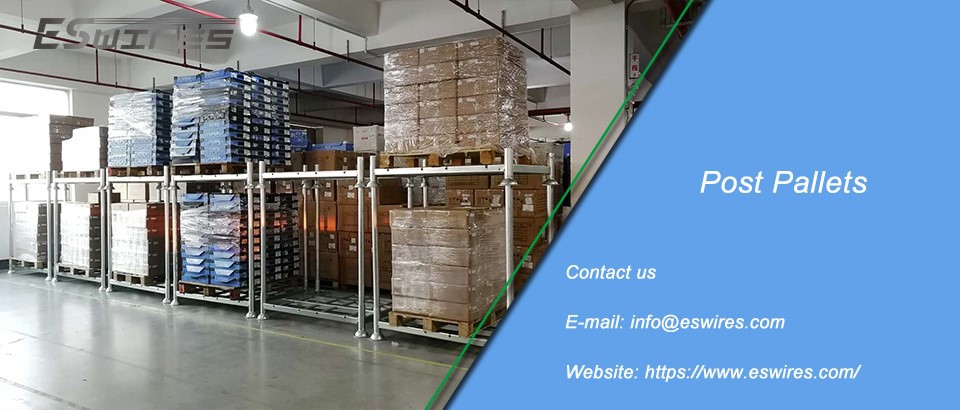
Lean warehouse management focuses on eliminating waste, improving flow, and maximizing the use of available resources. As businesses seek more flexible and efficient storage systems, post pallets have become an important piece of equipment in supporting lean operations.
One of the key principles of lean management is reducing unnecessary movement and handling. Stack post pallets help achieve this by enabling efficient unitized storage. Goods can be loaded into a single pallet unit and remain there throughout storage, transport, and staging processes. This minimizes repeated handling, reduces labor effort, and lowers the risk of product damage.
Another important benefit is space optimization. Post pallets allow warehouses to fully utilize vertical space by stacking goods safely in multiple layers. Compared to traditional floor stacking, this approach increases storage density without requiring permanent racking systems. At the same time, when not in use, many metal post pallets can be disassembled or nested, reducing wasted space-an essential aspect of lean thinking.
Post pallets also support flexible warehouse layouts, which is critical for lean operations. Unlike fixed racking systems, metal post pallets can be easily repositioned or reconfigured as inventory levels and product types change. This adaptability allows warehouses to continuously improve layout efficiency and respond quickly to operational needs.
In addition, steel post pallets contribute to better organization and visual management, which aligns with lean tools such as 5S. By keeping goods neatly separated and clearly visible, they help workers quickly identify items, reduce search time, and improve picking accuracy. A more organized workspace also enhances safety and reduces operational disruptions.
Another advantage is compatibility with material handling equipment. They can be easily moved using forklifts or pallet jacks, supporting smooth and continuous workflow throughout the warehouse.
In conclusion, post pallets support lean warehouse management by reducing waste, improving space utilization, and enabling flexible, organized operations. Their practical design makes them a valuable solution for warehouses aiming to achieve higher efficiency and continuous improvement.