


Warehouse space is one of the most valuable assets in any logistics operation. As inventory volumes grow and storage costs increase, businesses must find ways to maximize their available space without expanding their facilities. One of the most effective solutions for achieving this goal is the use of Nestainer racks, a flexible storage system designed to optimize vertical space utilization.
Traditional floor storage often leaves a significant amount of overhead space unused. Nesting racks solve this problem through their stackable design, allowing goods to be stored safely in multiple layers. Depending on the load capacity and warehouse conditions, pallet tainer racks can typically be stacked 2-4 high, transforming unused vertical space into productive storage capacity.
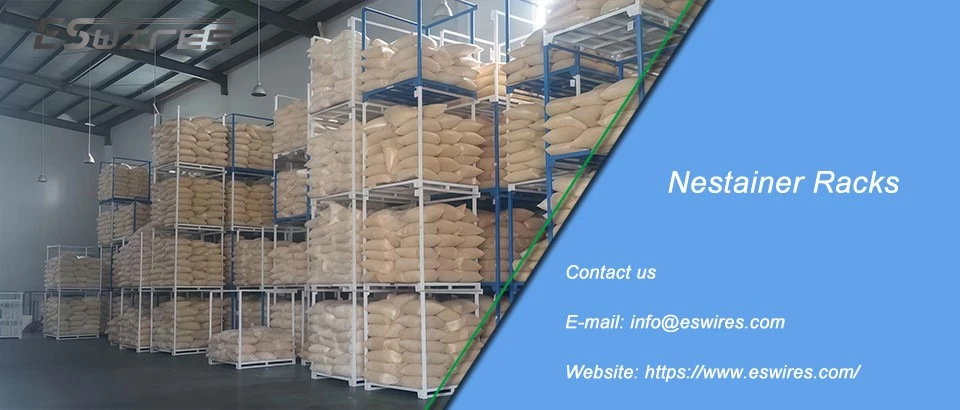
By utilizing warehouse height rather than expanding storage across the floor, businesses can significantly increase storage density. This approach is especially valuable for warehouses handling seasonal inventory, raw materials, bulk products, or overflow stock. More products can be stored within the same footprint, helping reduce the need for additional warehouse space and lowering operating costs.
Another advantage of Nestainer racks is their flexibility. Unlike fixed racking systems, they can be easily repositioned and reconfigured as storage requirements change. This allows warehouse managers to optimize layouts while maintaining efficient use of vertical space. During peak seasons, additional racks can be stacked to increase capacity, while during slower periods, unused racks can be nested together for compact storage.
Nestainer storage racks also improve warehouse organization and accessibility. Products remain neatly arranged within individual storage units, making inventory easier to identify and manage. At the same time, forklift accessibility ensures that goods can be loaded, unloaded, and retrieved efficiently from stacked racks.
In conclusion, Nestainer racks maximize warehouse vertical space by enabling safe multi-level stacking, increasing storage density, and providing flexible storage configurations. Their practical design helps businesses improve space utilization, enhance operational efficiency, and reduce overall storage costs.


